

Conversando Con La Luna: Anthony Almonte in the Pocket
A born salsero — known to general audiences as the Disciples of Soul and E Street Band’s singing percussionist — Anthony Almonte makes his solo debut: a salsa record with a rock heart, ten cuts deep, and a coming-out party that was always going to happen on his own time.
Rock ‘n’ roll fan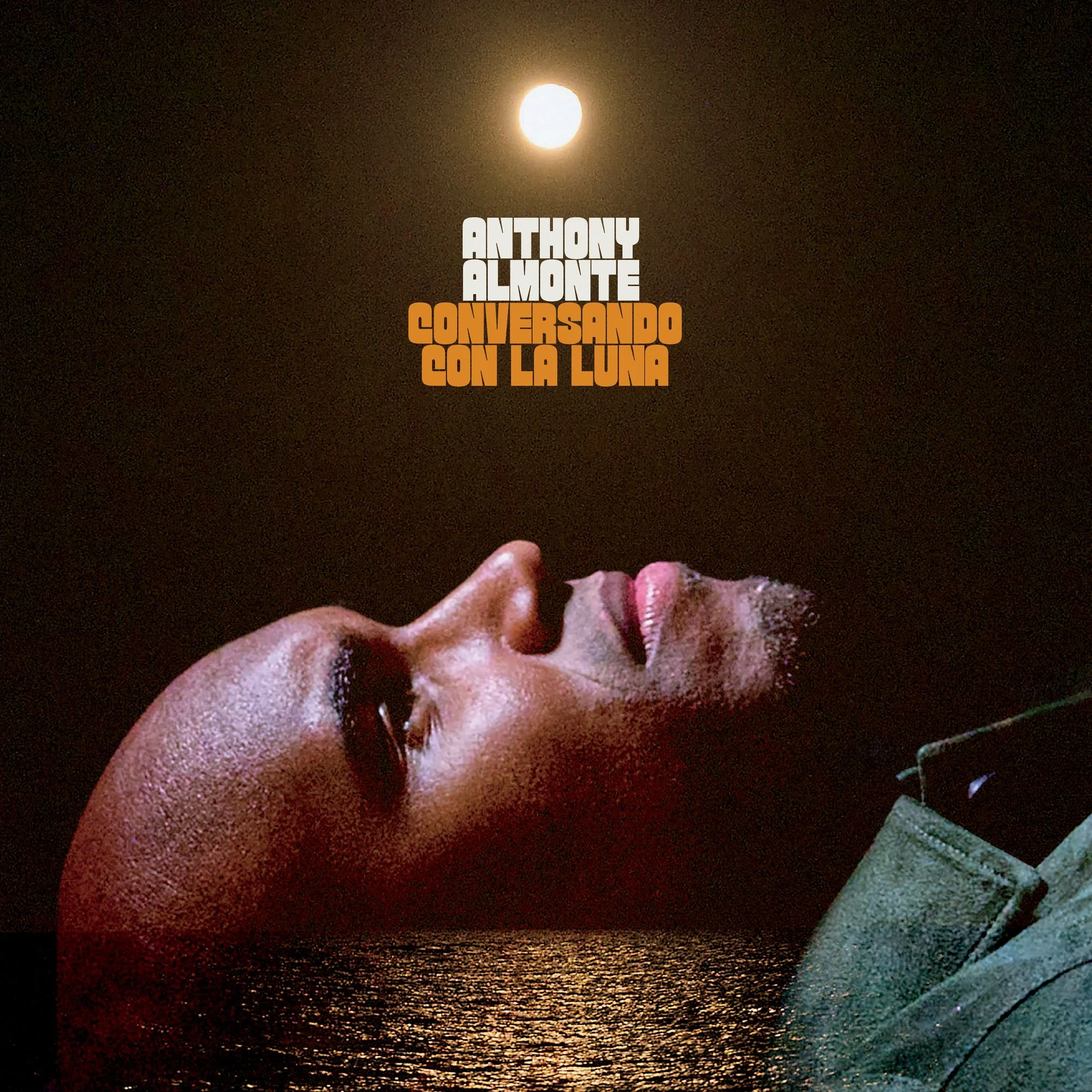 s know Anthony Almonte as the guy you felt before you saw him — the percussion and the harmony underneath somebody else’s spotlight, most recently in Stevie Van Zandt’s Disciples of Soul and Bruce Springsteen’s E Street Band. Known to salsa and jazz audiences for his features and his work with Little Johnny Rivero, this debut solo LP finds Almonte walking to center stage and finding out the lights had been waiting on him the whole time.
Out May 15 on Van Zandt’s Wicked Cool Records, the album is, on paper, an unlikely object: a Spanish-language salsa record on a label built for garage rock and British Invasion worship. En la práctica, it’s the most natural thing in the world — and exactly the kind of border-erasing move Almonte excels at.
This was a long time coming, and you can hear the patience in it. Born in the Bronx in 1992, Almonte caught the percussion bug at six on a family trip to Puerto Rico — bomba and plena first, before anything else — and was gigging around New York by ten. The résumé that followed is a strange and beautiful thing for a salsero: Los Hacheros, Edwin Bonilla, Kid Creole and the Coconuts, Grupo Arcano, then the leap in 2017 into Little Steven’s Disciples of Soul and on to the E Street Band — the latter chapters caught on film in Road Diary and Stevie Van Zandt: Disciple. Two Grammy nominations, a stint beside Wynton Marsalis and Eddie Palmieri. Conversando is what happens when a musician with all of that in his hands finally makes the record under his own name.
The foundation is salsa — melodic and proud — but Almonte treats the clave the way a rock band treats a backbeat: as a launchpad, not a cage. Across ten tracks and a lean stretch of time, he folds in the Fania and NY/DR-tinged salsa of his childhood, pop melody, and the widescreen dynamics of the arena stages he’s spent his career on. The sequencing tells the story: an instrumental Preludio clears its throat, “Notas Del Pasado” looks over its shoulder, and from there the record traces a man shedding an old version of himself and walking into whatever comes next. Love in its full register — the rush, the vertigo, the particular fear of falling in too deep. Talking to the moon, after all, is what you do when the feeling gets too big for daylight.
One of the smartest things about the album is that Almonte refused to make it a monologue. He spreads the arrangements across a deep bench — Jonathan Montes, Jeremy Bosch, Joaquín Betancourt, Manolo Vega, Steven Salcedo, Carlos Henriquez, and himself — so each track gets its own tint and the album never settles into a single groove. It’s a record that keeps moving.
And then there are the guests, who could have buried a lesser host and instead just confirm his standing. Cuban piano titan Gonzalo Rubalcaba brings his harmonic gravity to “Cómo Dejar De Quererte.” Havana’s Alexander Abreu lays blistering trumpet across “Rompecorazones,” a cut co-written by Leider Chapotín. Venezuela’s Ronald Borjas trades verses on the single “Imagínate Conmigo.” El Caballero de la Salsa himself, turns up in the coros, blessing the thing from the choir rather than the marquee — a generous, telling touch. And on “Caminando,” planted right in the middle of the record at track five, Little Steven steps in and lays down an incendiary and salsa-bluesy solo that’s maybe longer than anything he’s put on his own records: Almonte makes it happen, getting the rock consigliere on a salsa cut, a small detail that says everything about the company Almonte keeps and the bridges this record was built to cross. The core band behind them — Marc Quiñones (plus Ozzie Meléndez and Charlie Giordano of the touring E Street Band, on trombone and organ respectively), a rotating cast of bongó, conga, and timbal players — is every bit as serious as the names on the cover.
For all that firepower, Conversando is a personal record, not a flex. It plays less like a romance than like a study in the nerve it takes to want something all the way. As a debut it’s remarkably unhurried — the work of a musician who already knew exactly who he was and was simply waiting for the right room to say it in. He’ll christen it live at Jazz at Lincoln Center on July 9, which is the correct address for a record this ambitious.
And the songs reward the patience. Across the entire record, every track plays like a standout — a few in heavy rotation for me right now are: . The smooth, sweet, and romantic “Oxígeno De Amor,” the kind of closer that lingers long after the needle lifts, and the sophisticated, jazzy salsa romance of “Confía En Mí.” Then there’s the lush, acoustic, “Solo Por Ti” – when Almonte recites the song’s title; spoken, not sung – it’s an ending guaranteed to make enamored listeners swoon.
Almonte has spent his life making other people’s music feel more alive. Conversando Con La Luna is the sound of him finally doing it for himself — and confirming, in the process, his place at the center of the new salsa. Y ya era hora.
– bill teck

THE RECORD Conversando Con La Luna — Anthony Almonte Wicked Cool Records · May 15, 2026 · 10 tracks
Tracklist: Preludio · Notas Del Pasado · Conversando Con La Luna · Rompecorazones · Caminando · Confía En Mí · Cómo Dejar De Quererte · Imagínate Conmigo · Solo Por Ti · Oxígeno De Amor
Key features: Stevie Van Zandt — voice & guitar (“Caminando”) · Gonzalo Rubalcaba — piano (“Cómo Dejar De Quererte”) · Alexander Abreu — trumpet & vocals (“Rompecorazones”) · Ronald Borjas — voice (“Imagínate Conmigo”) · Gilberto Santa Rosa — coros
Release show: Jazz at Lincoln Center, NYC — July 9, 2026
