

Conversando con Anthony Almonte
The Bronx-born percussionist and vocalist on his debut album, living between two musical worlds, and the romance and beat of Conversando Con La Luna
By Bill Teck · Generation ñ
There are few musicians who can claim a real foothold in two worlds at once. Anthony Almonte is one of them. On any given night he might be on stage at Madison Square Garden with Bruce Springsteen and the E Street Band, and on another he’s fronting a salsa band with a conga between his knees and a montuno in his throat. For years those two lives ran on separate tracks. With his debut album as a leader, Conversando Con La Luna (out now on Wicked Cool Records), they finally meet.
I’ve known Anthony since 2019, when he was playing with Little Steven’s Disciples of Soul, and i became an instant fan of this full-fledged bandleader, singer, writer, arranger,producer and percussionist. We sat down the morning after the the E. Street Band (of which he’s a touring member) played the Garden to talk about the record, his roots, and the very specific terror of asking Stevie Van Zandt to play on your song.
You played Madison Square Garden last night. You’re a Bronx kid — that’s got to mean something.
It does. I didn’t have a huge crowd there — just my parents and a couple of friends — but walking into that space is something else. As a Knicks fan, knowing all the history of performances at the Garden, it’s just a historical building. You walk in and you feel that energy. The crowd was crazy. It’s a lot of fun.
I caught you guys in Florida recently and I have to tell you — I’ve been seeing this band since the 80s and I don’t think I’ve ever seen the E Street Band tighter.
It’s wild, because the band doesn’t really rehearse that much. They just get right back on it, like not a day’s been missed. For a band this big, with this kind of production, to hop right back on like nothing — it’s pretty insane.
Let’s talk about your incredible record, which came out last week, Conversando Con La Luna. I got an advance copy — it’s incredible. It feels like you’re telling a story about love and acceptance, but riding this beautiful, groovy salsa. And not just New York salsa — something more global.
You hit it on the nail. The first thing is, yes, it has that New York characteristic, because, yo soy Nuyorkino y la sala que yo vengo escuchando es de aya , Eddie Palmieri, todo la salsa que vino de aca, la época de la Fania but it pulls from a lot of different influences. There’s a huge Cuban influence —i mean salsa rhythms are Cuban, but it’s very modern, there’s Cuban Timba, the forms of the coros are not traditional New York or Puert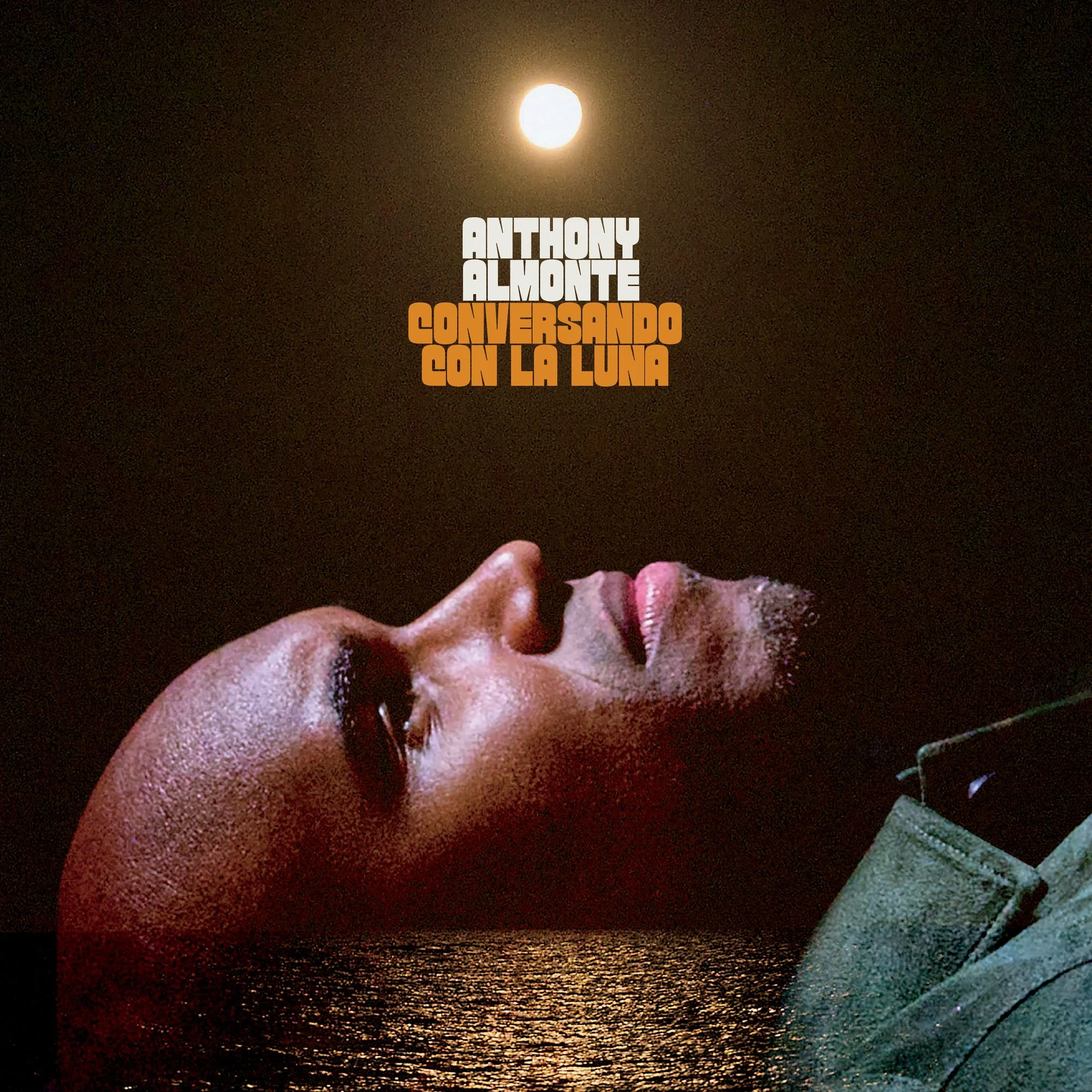 o Rican salsa, its got more of a Cuban feel to it, the salsa rhythms are Cuban to begin with, but I mean a more modern Cuban sensibility, because I’m a huge fan of that. Es una mezcla interesante y aparte de eso mis influencias musicales. So there’s rock and roll. Hay guitara electrica, There’s an acoustic, more broken-down tune. There are soul and pop elements, especially in the voicings and a lot of the harmonic structure, which isn’t traditional to salsa at all. Those are all my musical influences, embedded into one album on a bed of salsa.
When I first became aware of you, you had roots playing with a lot of great artists — Wynton Marsalis,Spanish Harlem Orchestra, you name it. But i got to know you personally when you were playing in the Disciples of Soul. I remember thinking, this guy that plays percussion and sings — he’s amazing. Then I started following you and realized you’re tremendo Salsero, a writer, an arranger,, a great singer and it all comes across on the record.
It’s funny. When we met, my American music life as a percussionist didn’t really cross paths with my salsa career. I was already singing salsa, but it was very split. The people who followed the Disciples of soul stuff didn’t know what I was doing on the salsa side, and vice versa. I was kind of living two lives. It finally merged when I started touring with the E Street Band, just because that band is so massive that you can’t hide it anymore. Everything crossed paths at once.
Back then I’d started recording my first record with Little Johnny Rivero, who was my teacher. That’s where I really learned how to produce a salsa record. Then I joined Carlos Henríquez’s band in 2017 — the same year I joined the Disciples. Everything led to this moment. It’s pretty bizarre, actually.
Your roots are all over this — not just in the tracks, but in the guests. You’ve got Gonzalo Rubalcaba, Gilberto Santa Rosa, Alexander Abreu on trumpet.
Uno lo sueña porque lo sueña, pero que se haga realidad es otra cosa totalmente, ahora mismo por ejemplo estaba en un mensaje con Gilberto Santa Rosa, y yo al poder decir eso es como que… wow… que lindo, el ha sido tan bueno con migo, bueno, el es bueno con todo el mundo, pero que increible es ese hombre, y tener a Gonzalo Rubalcaba eso es, algo que… se un maestraso. Yo lo vie en vivo, y el no se va a acordar, pero but i saw him at Dizzy’s club in 2018, y por supuesto, yo sabia quien era, pero me quede histérico. And ever since then i dreamt of having him on a track, and thanks to Carlos Henriquez we were able to get that together. I saw Alexander Abreu , i remember when when he first came out with “Carita de Pasaporte”, I used to burn that song — it was such a different sound from what I was used to. I said, this is it. This is the style, the chorus, everything. I never thought I’d actually get him on a track. We managed it thanks to one of the album ‘s arrangers, Joaquín Betancourt, a Cuban legend.
Then there’s Ronald Borjas, the Venezuelan singer — a great friend of mine. Nosotros cantamos juntos en el ‘22 o ‘21 creo, y nos hicimos panas. Y cuando preparamos la cancion “Imaginate Con Migo”, yo escuche la voz de el, me sonaba a el, la época de el de Guaco, sus cosas solitario, el tiene unos temas que son lindisimo, y tiene una voz tan linda que dije esta canción le quadra perfectamente. The song fits his voice so well he could’ve sung it alone, but I’m glad he sang it with me.
And then there’s Stevie.
To have Stevie Van Zandt on this album — on “Caminando” — means the world. Here’s a funny thing: I knew I wanted him on that song, but I was really nervous to ask. Every song is prepared for that special guest and “Caminando” was just for him. We’re really close, and I was still nervous, because at the end of the day Stevie is still Stevie Van Zandt, apart from being my friend.
When I finally asked, it was the easiest thing on earth. He goes, “You want me to just play on one track? I could play on more.” I said, thank you, that’s AMAZING — but i want to give you your flowers. You deserve a feature, a spotlight, not just to be a guitarist on the album. He doesn’t always play a lot of solos on the E. Street stage and there’s one song, If I Was The Priest, we’ve only played that a handful of times and i Love that song… his solo at the end… his solo is so fantastic and he’s got that string-bend vibrato, and it just fits the song perfectly. When we put it together I thought, that’s you. I want that. And boy he delivered. Oh my God, he delivered.
Stevie always has a little Latin groove goin’ on, Party Mambo, Bitter Fruit, etc.. people may not know he’s got a deep knowledge of Latin music.
Bueno yo me entere estando con el, que el es fanatico de Tito Puente, nosotros nos juntábamos y el le encanta ser DJ en cualquier junta que tememos y bueno, lo primero que pone es mambo. Like that’s special. He absorbs so much music. The fact that he loves Tito Puente — for me that’s like, of course. Of course Stevie would.
Was Tito your inspiration picking up the timbales?
Oddly enough, timbales aren’t really my primary instrument. In Latin percussion you have to learn to play them all, and I love playing them, but congas are my first love. My early influence was Ray Barretto — I’m a huge fan, still listen to him like crazy. His records are phenomenal. And in salsa in general, i’m a huge Sonora Ponceña fan, Papo Lucca’s arrangements are just brilliant. Being Little Johnny’s student connected me to all of that, he was in Sonora when he was like 16 or 17 — and i knew all that when i started taking lessons from him. I was a fan of that band before I ever took lessons, and I still am.
Were your parents musical? I had the honor of meeting them in London after a show — beautiful people. Your brother Ángel was there too.
He’s a sweetheart. That was awesome. Mis padres no son músicos para nada, ni te tocan una maraca, pero, son bailadores de salsa, en mi casa siempre se escucho salsa. A mi mama le encantaba la Sonora Ponceña, de ayi viene mi amor por esa orquesta. Son amantes de la musica, tambien se escuchaba merengue, yo soy mitad Dominicano, la salsa Dominicana, lo que es Cubano hoy, todo los artistas Dominicanos, Raulin Rosendo, se escuchaba en casa tambien. Yo era super merenguero cuando era nene, i was a huge Fernandito Villalona fan, a huge fan. At home we listened to everything. On my dad’s side, he was a huge James Brown fan — that was my introduction to funk, and later I fell in love with seventies funk. But I was surrounded by music, especially on the holidays in Puerto Rico se hacen las parrandas navideñas, and I’d be four or five years old everyone’ s playing the pandeiros and I just loved it. My attention span went straight to percussion — congas especially.
The day we knew i had to play music… Tito Puente had a restaurant on City Island in the Bronx where the barstools were actually congas. I must have been about five — I think it was my brother’s communion. We went there to celebrate, and I saw those congas, ran over, and started banging away on all of them. Some guy’s sitting at the bar trying to have a drink in peace, and I’m pounding the drums. The manager walked over to my parents, and my dad thought I was in trouble. But the guy said, “No, no — I just want to tell you, your son was meant to play the drums.” He wrote down a place for me to take lessons — Boys Harbor, up in El Barrio. I was too young at the time, so when I turned six I started. That’s wild that someone picked that up… I never knew his name…
That’s prodigy stuff.
Well… anyway, my mother’s family is Puerto Rican, from a town called Canovanas, and my dad is from the Dominican Republic from Santo Domingo from a town called San Carlos
Ok so the first single, the first video, directed by Ryan Celli who worked with us on Disciple, and with Ronald Borjas on the track, it’s blowing up, it’s a great video, great song and his voice is incredible on that – as is yours.
When we got to sing live at that event, i envisioned doing something with him on one of his projects or one of mine – i used to listen a Guaco live album and i loved listening to his tracks, the way he delivers them – i memorized them. They’re one of Venezuela’s top bands, so i used to listen to them all the time and study them. The first time we got to work together was very special to me – and then to have him on the record… i called him and he was in the studio and he said, estoy trabajando en este nuevo proyecto y tengo una cancion que me encantaría invitar te para que la cantes conmigo y me dijo, ‘pasa me lo, y estuve en el teléfono, y creo que no llego al segundo verso y me dijo papi, dime cuando y estoy ayi, esto me cuadra!
And the video, Man, so Ryan Celli, we know, is a great, Incredible, talented filmmaker. And I was really nervous about doing the music video because I really didn’t have a concept for it. You know?
I focus so much on the music production side that I I couldn’t really visualize what, you know, what to do with the video. And Ryan goes, let’s sit down and have dinner. And, I mean, it was instant. Ryan’s like, let’s do this. We’re gonna go out to this beach.We had to find a beach that had the aesthetic we were looking for and wasn’t crowded. And it just all worked out, and it was so seamless. And, I’m so happy with how it came out because it captures that reflectiveness and that intimacy that the song and the whole album in general gives off.
Let’s talk about the shape of the record. A song like the intro, Preludio, really sets the stage — this isn’t just a collection of songs, it’s telling the story of someone finding a certain kind of love and peace within himself.
Exactly. I describe it as a person not singing to someone they love, but experiencing the experience of love — being reflective about it. The title track was the last song I wrote, and it encapsulated everything: someone having a conversation with the moon, but really speaking to himself. That’s the mood I wanted.
I didn’t write every song — there are a couple I didn’t — but when Jonathan Montes, my co-producer, and I put the song list together, we had the concept clear from the jump, which gave us direction immediately. The “Preludio” idea came about three-quarters of the way into production. Jonathan said, let’s do this kind of sound design — you’re walking out of a party because you want to be alone and reflect. You hear the clinking of glasses, you open the sliding door, walk onto a beach, and hear the waves. When we imagined that scene, I wrote that monologue in a matter of seconds. That’s why it sounds so natural — it just flowed out, and I said, I’m not editing this. I’m not changing a thing.
It’s perfect. It really sets the scene. You live such a romantic life — and I mean romantic in the sense that not everyone is on a beach in San Sebastián one day and in Dublin the next, with one foot in salsa and one in rock and roll, doing both at the highest level. Nobody else can say that. That energy is in the tracks — someone discovering a whole world.
Thank you for saying that, because that’s what i wanted to try to transmit, and you never know how it’ll land. Once it’s out in the world, it’s all about how the listener receives it — and you don’t make it mean anything. I’ve gotten messages like, “‘Caminando’ has me all hot and bothered, that’s a steamy song.” Great — that’s how you received it, that’s all right. If I told you how I receive it, it’d diminish your experience. So I let people take it however they take it.
But one thing I did want to transmit: it’s my experiences funneled through my musical influences and the joy I carry in my life, because I’m a pretty happy person. I wanted to make an album that was all positive. There’s not a single breakup song on it — none of that amargura. I wanted it reflective and positive, the kind of record you put on during one of those moonlit nights when you’re reflecting.
Did you know going in that you were making a record, or were you just laying down tracks?
We knew. And the direction came about in an interesting way. I met Jonathan back around 2017 or 2018 in Los Angeles — he played weekly with a band I’d go see, with my friends Oscar Castaña on bass and Angelo Pagán singing. Jonathan would be hammering the keys. We finally connected, and then in 2023 a very respected percussionist, Kevin Ricard — who’s actually on the record — recorded a song that Jonathan produced. Jonathan sent it to me and said, “I hear your voice on this.” I loved every bit of it: the lyrics, the style, and it left enough space for me to put myself into it. I said to myself, if I make a record, this is the direction I want.
It had the same sensibility, the same compositional style — and the composer, Juan Cosme, ended up being one of the co-writers on the album. So I told Jonathan, I want to make a record along this line. I already had a song ready to show him — the last track on the album — which I co-wrote with Manuel Vega, my songwriting mentor. We had all kinds of tunes. I went to LA, we sat down and started funneling the concept, scratching songs until we had about six. Then I went in and wrote the rest. The title track was the last one I wrote.
I wasn’t even planning to name the album that. That was Javier Ráez, the engineer, and Jonathan. The moment I showed Javier the song, he said, “This is it. Everything’s got to be named after this.” He was very convincing — so that’s what we did. It was a lot of fun to put together with these guys.
Here’s something our Generation Ñ audience will love: I was reading up on you and saw you have two degrees — an MBA in finance and an advanced certificate in sports and entertainment media. People say those are two different sides of the brain. How do you balance the virtuoso musician with the finance guy?
My parents always said, “Do music all you want, but get a degree. Study something.” I always liked math — and being a musician, there’s a lot of math involved. I took a business course in high school, loved it, and went all the way. I promised my mother I’d get a master’s, and I did the program in a year at Iona University. I never worked in the field, but do I use those tools? Absolutely. A hundred percent.
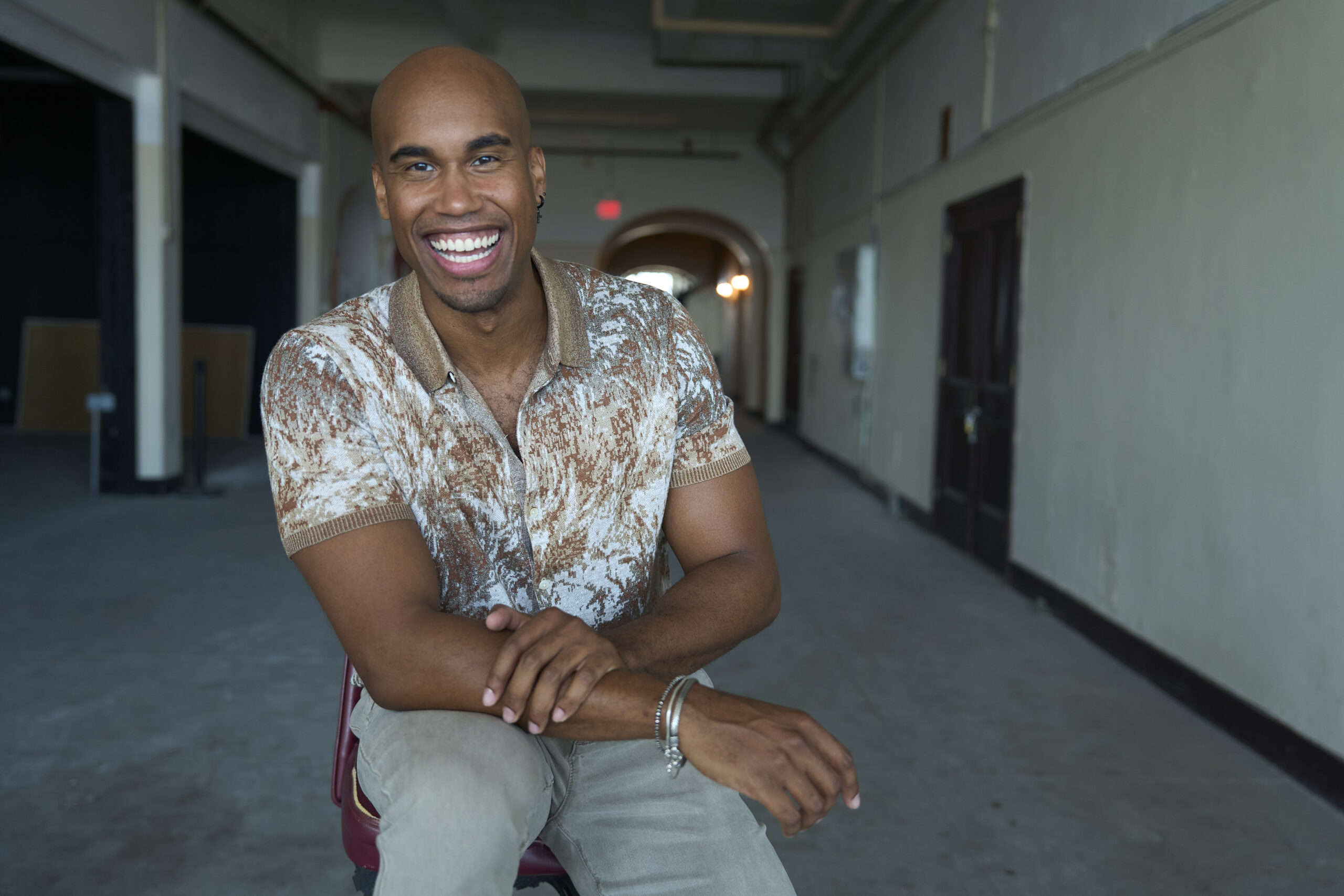
Anthony Almonte (photo by Danny Clinch)
That’s a key point for our audience — they’re bicultural, first generation or right on that cusp, and everybody has those parents. Even my own son sees me directing and thinks it’s all fun. I tell him, it is fun, pero saca el papelito porque el dia de mañana… y vienen los robots. But this buddy of mine, Richard Blanco — inaugural poet — he’s also an engineer. There’s something to having both. You do things because you want to, not because you have to.
The greatest thing for anyone is to have options. If you’re limited to one, hopefully it’s a great one — but having the option to do A or B is a great problem to have. Study as much as you can, everyone — feed your mind, and never stop learning. I’ve been playing since I was six and I learn constantly, from my peers, from some incredible cat in a video from Peru. I’ll go practice that for two hours.
But the other half is: take action, and don’t be afraid of risk. So often we study and study and then we’re mortified to make the leap we’ve always wanted to make, because it’s safer to stay put — and that leads to complacency. You have to take leaps. If it goes great, great. If it doesn’t, at least you did it, and you don’t live with the regret. Bet on yourself.
Beautiful. The album’s out now on Wicked Cool — Stevie’s label. And, speaking of that… the Disciples are playing one more show July 3rd!
And I’ll be there.
So will I! I can’t believe I’m going to see the Disciples one more time.
That’s going to be a lot of fun, and hopefully there’s more — it’s one of the greatest bands. We had so much fun on the road. The Summer of Sorcery tour was so special. I told Steve, this whole show is something else. It’s a great collection of musicians who sound like one unit, with Stevie at the helm — a phenomenal leader and one of my favorite people on earth.
There’s also an album release party — and you’re invited. July 9th at Dizzy’s Club, Jazz at Lincoln Center, in New York City. Tickets are at jazz.org.
I’ll be there. For people coming to the record, I wanted to ask, where’s the way in? Or your fave three or four tracks —but it truly is a cohesive whole. It’s a perfectly sequenced album — a song cycle. That’s what makes it hard to pick. I’ll have a favorite track, I’ll go in on it, and then I find myself listening to the whole thing front to back.
Thank you, i guess my answer is: start at the top — “Preludio” into “Notas Del Pasado” into the title track. If that catches you, just keep going.
It’ll catch everyone. Anthony, I’ve always wanted to sit down and talk with you, and your great new album gave me the excuse. Thank you, man.Thank you for making the time — after a gig, on a Sunday morning, no less. Thank you for your beautiful album. God bless you, brother.
Anthony Almonte’s incredible debut album, Conversando Con La Luna, is out now on Wicked Cool Records, available on vinyl, CD, and all digital platforms. The album release party takes place July 9th at Dizzy’s Club, Jazz at Lincoln Center, New York City — tickets at jazz.org.
