
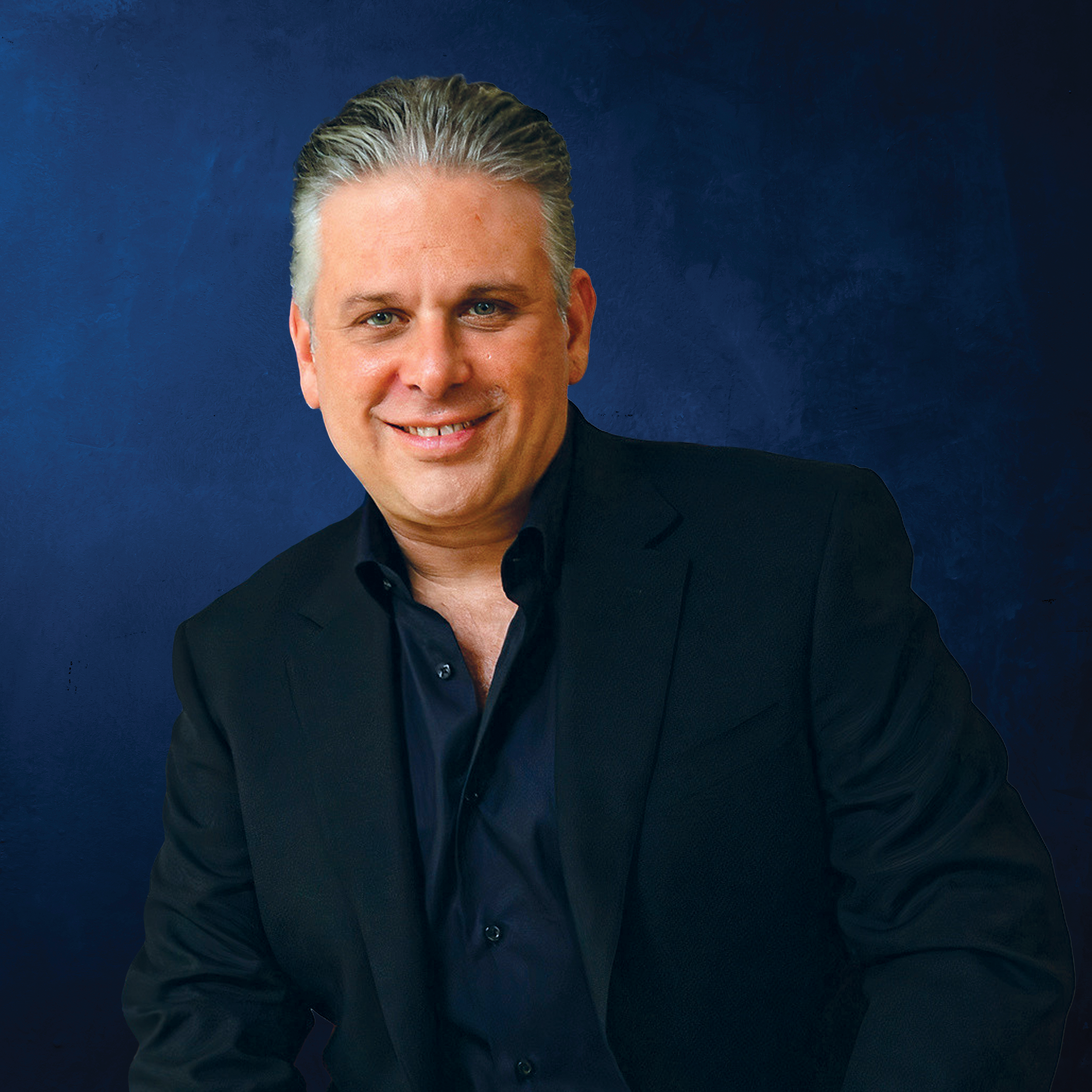
Nelson Albareda: On the Álvarez Guédes tribute show, legacy, and preserving Cuban-American culture in Miami, in Conversation with Bill Teck
A tireless crusader for preserving our culture and much of what’s magic about this city, Nelson Albareda was eighteen years old the first time i spoke to him. I was twenty-seven, running Generation Ñ out of a cramped office and a stubborn dream, and this young man— calling from RMM Records, where Ralph Mercado had handed him the keys to PR before he could legally order a beer — was on the line telling me, in that Miami-Cuban cadence that is half relentless drive and half cariño, that he was going to help me get sponsors. And he did. Three decades later, Papo is still doing what he did that afternoon: making things happen for the culture, on the culture’s own terms. He built and sold profitable companies, and is currently turning his newest, Loud And Live, into a juggernaut. He has won Grammys and Latin Grammys producing legacy tributes for Celia, for Cachao, for Willy, and others. And now he has resurrected Guillermo Álvarez Guédes — our Richard Pryor, our Gema Records founding father, our patron saint of the well-timed punchline — in a cabaret built inside Tropical Park, in the middle of Westchester, where it belongs. We got on the phone to talk about it.
Editor’s note: This conversation has been lightly edited for clarity. (Meaning we took out the loud “Papo!” that we greeted each other with, and our “Te Quiero, Dale!” at the end – but we do mean it, and you can listen to our conversation on the Miami Now Podcast on and the generation ñ Podcast on Spotify, apple, etc… )
BILL: Nelson, first of all, it’s an honor to have you on. I want to talk about the show, and I also want to talk about your career and everything you’ve done to preserve culture in our city — Latin culture, Cuban culture. To start, can you tell me the proper name of the show? And I think it’s getting extended, correct?
NELSON: The full name of the show is Muerto de Risa: El Último Show de Álvarez Guédes. And yes, we just announced this week that we’re extending it through Father’s Day. The demand is huge, so we might even extend it further. But listen, the show really is — and first of all, Bill, it’s an honor for me to be on this with you.
BILL: No, man. The honor is mine. The last time we did this was Qué Pasa, U.S.A.Today — you put it on at the Adrienne Arsht Center. I was helping you a little bit with that, and watching you realize that vision was mind-blowing. It takes a very special person to pull something like that off. Then you were telling me about the Álvarez Guédes project, and I didn’t quite understand what it was going to be. And then I saw it — mind blown.
NELSON: The honor is mine, Bill. You met me when I was eighteen years old — that’s a long time ago. Generation Ñ was just starting, I was working in the music business with Celia, with Tito Puente, with La India back then.
BILL: I’m going to ask you about all that. I remember when we met — you were eighteen and you called me up and said, “I love your magazine, bro. I’m going to help you. I’m going to get you Rum Matusalem to advertise, I’m going to get you another sponsor.” And I was twenty-seven or twenty-eight, thinking, how is this young guy going to help me? But you did. You got me great sponsors, you supported me throughout my career, and I watched your rise. I want to go through all of it — working at RMM and everything — but it was very special what you’ve done. I want to start, though, with the fact that at thirteen you had a Catholic magazine with something like a million copies in circulation. Who does that?
NELSON: It was a teen Catholic magazine that didn’t necessarily talk about “how to make love to your man,” if you know what I mean (laughs). It was pop culture with good morals.
BILL: And then RMM Records — head of PR at eighteen.
NELSON: Yeah. And you know, how Cuban parents have the hall of fame for their kids on the wall, and at my dad’s house there’s still a Generation Ñ article you guys wrote about me. María Budet wrote the story, and she asked, “Where do you see yourself twenty-five years from now?” I said, “Running my own marketing agency.” I read that years later and thought, damn, I was on point. That’s exactly where I am today. Listen, God has been good to me in business and in my career. Growing up in Miami, being part of the Cuban diaspora — for me, it’s like thinking about New York: the Italians and the Irish and others built that city, and today nobody really realizes it. In Miami, the fact is that Cuban exiles and Cuban-Americans really built this city. First, it’s important to me as a Miami person. Second, the amount of Cuban culture that needs to be preserved as legacy is important to me.
That’s why I did Celia [Cruz’s] thirty-fifth anniversary in 2005 — my first big project back — and we got nominated for a Latin Grammy. Then Willy Chirino’s fiftieth anniversary, then Cachao’s eightieth anniversary, which actually won a Grammy and a Latin Grammy. There was Celia’s centennial, where we found an old recording — I don’t remember if it was at Casanova’s or another club in the eighties — that had never come out. We released it, did a book, and we won a Latin Grammy.
Throughout my career, every two or three years, I make a point of doing a legacy project. This one started in 2019. I thought: this guy never had a proper tribute. And I don’t think people realize how big Álvarez Guédes was in culture, outside of comedy.
BILL: Talk about that.
NELSON: I think he was like the Richard Pryor who opened up stand-up comedy for all Latinos, not just Cubans. And he started Gema  Records in the fifties. He’s the first guy to sign Elena Burke. Then he signed Olga Guillot, Rolando Laserie, a whole bunch of people. He goes to Puerto Rico and signs a band called Cortijo y su combo and renames them El Gran Combo. Even later — was Willy Chirino. So he had a huge role in culture that people don’t realize outside of comedy.
And beyond that, I’ve now been working on this project for seven years. Every time I turn a page, every time I speak to somebody — the other day, i was talking to Lili Estefan and she said, “My first shot at doing a TV show in the Caribbean was with Álvarez Guédes.” I had gone to see his widow in 2019, and unfortunately she has since passed, but she gave me the rights to do this show.
Originally we were going to launch it the same way you and I worked on Qué Pasa, U.S.A. at the Adrienne Arsht Center. It was a different concept, and then COVID hit. I had to pull the show. I kept thinking, how do we do this? And actually, doing it at the Arsht would have been an issue because it wasn’t intimate enough.
What the show is today is that Álvarez Guédes comes back from heaven for his last show in Miami, set in a cabaret. The inspiration was Les Violins, the old cabaret in seventies and eighties Miami, which by the way I never went to. But I heard the stories and I read up on it. It’s always an experience: first you have drinks at a piano bar, then you go fully into a cabaret. People think about it as comedy, but it’s theater — it’s his life, him telling his life story. We have a very talented Cuban actor, Ariel Texidó, playing the role. We have Ruben as part of the cast — another iconic Cuban actor. He’s eighty-eight years old and I think he gets better every day. We have a full band, dancers, the whole show. And then afterward you go out to a patio where you can have a drink and a small bite.
BILL: One of the things people are going to get a huge kick out of is the two sides of your career — the straight-up business success and these beautiful cultural projects. At eighteen, you’re at RMM Records under Ralph Mercado, spearheading Tito Puente’s fiftieth anniversary. Celebrating that, the tributes to Celia, the beautiful Willy Chirino tribute — so deserved, one of our jewels. But while you’re doing all this, you’re also building serious businesses. Can we talk about the company you created before Loud And Live?
NELSON: Sure. I built a company called Eventus, in the experiential space, working with big brands — Walmart, Verizon, State Farm, Dr Pepper Snapple Group, McDonald’s. I did a lot of work creating festivals all over the country for the Latin Grammys, and I did concerts. That’s really where my promoter world began. I was a small promoter doing Miami shows, maybe Orlando occasionally. My first big show at Madison Square Garden was Johnny Pacheco’s fiftieth anniversary, the final Fania Allstars.
BILL: So impressive. And then you sell it, you travel the world, enjoy the fruits of your labor — and then you create Loud And Live, which is a juggernaut. A colossal company with so many different elements, mostly live events and touring. Fascinating — but you don’t really need to be doing an Álvarez Guédes cabaret show. This is something that comes from the heart, to celebrate our culture and keep it alive.
NELSON: This is a baby of mine. We do a lot of projects here — on the show side last year alone we did four hundred shows around the world. We work with brands, we do big events here in Miami: Coconut Grove Arts Festival, the Christmas Wonderland, House of Horror. But this is a special project where I actually got involved as the producer and a co-writer.
There are two very talented gentlemen — ROBBY RAMOS & HECTOR MEDINA — both actors, are my co-writers and co-directors, and I produced, co-wrote, and co-directed with them. I reached out to them because for every project I need authenticity, people that are passionate. So I co-wrote it with Rolly and Hector. We were very purist with Álvarez Guédes. We picked up a ton of files from his two daughters, looked at archives. We really kept to the figure of who he was, and there’s nothing in that script you’ll see that didn’t really happen. In my opinion, it’s theater at its best, but with a real purist’s view of who he was.
BILL: When you take these projects on, the first word that comes up for me is gutsy. These are sacred cows in our community that a lot of people would be afraid to take on. And a lot of, quote-unquote, “creative” people would shy away from it — and as an aside, some of the most creative people I know are actually business people, But when you do these things, it’s a risk, and then they pay off — and I don’t mean financially, although I’m sure they do. They pay off artistically. How does that feel?
NELSON: Every legacy project I pick — and listen, I do like the creative side. I always say my background is marketing, but if you don’t get into a project and feel it, you can’t really produce. A lot of producers produce just for the financial side. The projects we’ve talked about — Celia, Willy, Cachao, Ibrahim, Álvarez Guédes — I never did for money. I did it for the legacy, for the love. If I could just be in a studio producing all day, I would love it. I get frustrated sometimes because I don’t have the time.
When you pick these projects, you have to give it everything. I give it all the love I have. I get into the history. With this one it’s unique, because every other project I’ve done — Celia, Willy, Cachao, Qué Pasa — in a way I knew them. I never actually met Álvarez Guédes. I grew up with him, but I never met him. And it’s interesting because, as you know, Bill, I’ve worked with everybody, and I never worked with him. So it took a lot for me to understand who he was — talking to his daughters, to family members, to his producer and assistant Ben, who worked with him for thirty years.
I gave it all I had. I hope that comes through in the show. Hopefully we’ll break even, hopefully we’ll make money. But if you do it for the money, you’ll never get a good product.
BILL: I was really touched by the cariño — el cariño de Miami — in everything you see there. It’s a very creative and unique show that could only come from your brain — and you co-wrote, co-directed, and produced it. So why is it important? When I think about the things you’ve done for Chirino, a lot of people don’t know that Álvarez Guédes produced his first record on Gema Records, One Man Alone — because Willy was a multi-instrumentalist who used to work in the studio. People don’t know that story. So many things you’ve done — for Cachao, for Celia — people are happy to forget. They give short shrift to our culture here. Miami culture. Miami Latin culture, and within that, Miami Cuban culture. People are happy to say, “Oh, finally we have the arts here.” And I’m like, nah, bro — we’ve had the arts here for a minute. It may not be the arts according to what some people would like them to be, but it’s our culture, and we’ve been very astute in the arts. It can be forgotten if no one’s looking out for it. So I’m grateful that you are. Why is it important to you?
NELSON: It’s important because in our generation of Cuban-Americans or American-Cubans — whether first generation or second, born here or émigré — I don’t want a place where, fifty years from now, people in Miami don’t know the Cuban influence my parents and my grandparents had on this city. That’s number one.
Number two: in the case of Celia, Willy, Cachao — the music is timeless. But Álvarez Guédes was a storyteller. I took my kids to the show. They know Daddy produced it, but I’ve got a twenty-four-year-old, a twenty-two-year-old, and an eighteen-year-old, and I saw them — they laughed the whole show. Last night I went and took two friends, one from El Salvador and one Nicaraguan, and they laughed at the show too. It’s not just a Cuban story. I tell people: you go see Hamilton — and I’m not comparing this to Hamilton — but it’s a story. And i hope this is the same way, you can’t take away the fact that he was Cuban and the history of Miami and all that. But at the end of the day, it’s about preserving the legacy.
This show in particular: he comes back to Miami because Miami was a big influence on him. He talks about Miami. He comes back for his last show — and that’s important. Preserving the legacy is important for my kids to understand and stay tied to it. I won’t quote the whole thing, but there’s a line in the show where he says, more or less, “I come back to Miami — and we’re Cubans, so I want to grab them, because sixty years later we’re still eating rice and beans, and my kids are too.” From an arts and culture standpoint, I don’t want that to end. I want it to be top of mind.
BILL: Thank you, my friend. I could talk to you all day, but I know you have another meeting coming up. Tell people how they get tickets and what to expect.
NELSON: Thank you, Bill. I wouldn’t be a business guy if I didn’t tell everyone to go on https://alvarezguedesmiami.com and buy tickets. The show is actually at Tropical Park, in the middle of Westchester. A lot of people asked, “Why don’t you do this in Wynwood, Design District, Little River?” I don’t know — we’re going back to the hood. This is where it belongs. People will be transformed, because it’s in a park, but we built a whole cabaret in the middle of Westchester, in a tropical park, which I consider Miami’s Central Park.
Shows are Thursday at eight, Friday at eight, Saturday at six and nine-thirty, and Sunday. This is something you can go to with friends, with family, with the kids, and really enjoy. We have different price levels — Ño Qué Barato and Ño Qué Caro, after the famous Miami discount stores. There’s something for everybody. Thank you, Bill, and thank you for the time. Above all, thank you for your brotherhood, your friendship, and the support always.
BILL: Papo, I’m so honored and happy to be your friend, and I just appreciate you, man. Thanks for always making time for me, for all the opportunities, for everything — and for what you do for our culture, which is really beautiful. I want to say thank you. It’s an honor.
For tickets or more info go to https://alvarezguedesmiami.com/
